
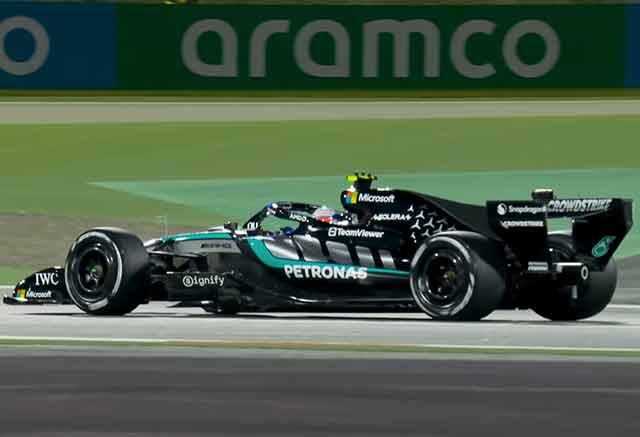
F1 Power Unit Rules Talks, Proposals to change the F1 power unit regulations debate will also become center-stage this Thursday when the key decision-makers of Formula 1 meet in London and we are moving into a critical period that may define the way in which the 2026 season will be developed. Having undertaken three races in Australia, China and Japan, the new rules have given some excitement as well as anxiety. The fans have had more overtaking and unpredictable race, but there is an emerging concern over the control of drivers, the qualification and most significant that of safety. And now no full-fledged overhaul, but the commencement of a judicious and deliberate effort to perfect what already exists.
To begin with, the primary emphasis of the F1 power unit regulations discussions is going to be on the management of energy particularly in qualifying. Classically, qualifying has been all about drivers going to the maximum limit, maximizing out of their vehicles. But the 2026 regulations have come to play new systems of complex energy deployments that are rearranging that dynamic. Your drivers now have to consider battery utilisation during a lap, even pulling off the throttle in quicker areas so that they can store the energy to use on straights. This has given rise to scenarios of qualifying laps not being anymore pure expressions of speed and skill.
This change has however not received well with drivers or fans. Some in the paddock think that the present-day system puts too much emphasis on a calculation of algorithms and energy, instead of the instinct of the driver. There has been raised eyebrows when cars intentionally slow down during a flying lap and this has culminated to a wider discussion on what Formula 1 really embodies. Consequently, the meeting on Thursday is likely to discuss some potential modifications, including the effective adjustment of the energy deployment or even to decrease the electrical part in case of qualifying sessions.
Simultaneously, it is necessary to know that these talks are just but the initial step. The F1 power unit regulations discussions this week are not likely to result in any immediate modifications. Rather, this meeting will enable engineers and technical experts to come up with ideas and possible solutions. The proposal will then be transferred to a formal discussion with the F1 leadership and the teams themselves on April 20 and a vote on it is going to be conducted electronically. Any concurred changes will probably be put on test by the Miami Grand Prix onwards and this will allow the sport time to test its effectiveness before making subsequent decisions.
In the meantime, the concern of safety has been re-invented. The discussion became urgent following the big 50G crash by Oliver Bearman in Japan that brought to the fore the dangers posed by the new rules. The higher closing rates and erratic energy deployment modes may provide unsafe conditions, and when drivers are compelled to operate their systems in a manner that spoils racing lines or reactions, it can be dangerous. These risks had been warned of as earlier as at the start of the season by McLaren team boss Andrea Stella and such concerns have been increased by the recent happenings.
Lastly, there should be management of expectations. Although there is an obvious incentive to fix the existing system it is not possible to have a complete overhaul. Teams and manufacturers spent colossal resources in terms of their power units development under these regulations, and the significant changes to hardware cannot be made at this point. What is more likely to come our way are slight but significant modifications- fine-tuning as opposed to changing. There is still a great influence these may have on the way races and qualifying sessions should happen.
The F1 power unit rules discussions can be seen as a turning point of the sport as we see into the future. They indicate the current difficulties by Formula 1 to weight the innovation and authenticity, technology and skill of drivers. Whether the sport can overcome its existing pitfalls without compromising the factors that make it so addictive depends on the next couple of weeks. In the meantime the spotlight is on the meeting of Thursday when the first steps towards such a balance will be made.
Follow the Social Media Channels:
Instagram: https://www.instagram.com/zeroto30s/
Facebook: https://www.facebook.com/zeroto30s
Twitter: https://twitter.com/zeroto30s
Youtube: https://www.youtube.com/@Zeroto30s