
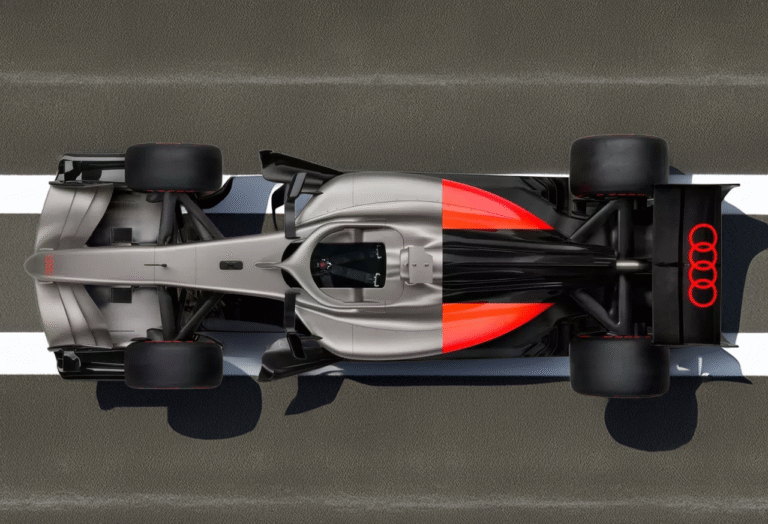
The Audi F1 engine upgrade that quietly appeared in the Barcelona paddock has sent shockwaves through the Formula 1 community and the more you dig into the details, the more remarkable the story becomes. While most of the grid was still digesting the outcome of the FIA’s first Additional Development and Upgrade Opportunities review, Audi had already moved.
New internal combustion engines and turbochargers were fitted to both of their cars at the Catalan race, and almost nobody noticed until after the fact. This is the story of one of the most carefully timed moves the F1 paddock has seen in recent memory.To understand why this matters so much, you first need to understand what the ADUO mechanism actually is.
Introduced to level the competitive playing field among engine manufacturers, ADUO allows power unit suppliers who fall below an established performance benchmark to introduce additional upgrades during the season upgrades that would otherwise be restricted under the sport’s tight development regulations. The first ADUO review period closed following the Canadian Grand Prix, with the FIA subsequently releasing performance classifications to all manufacturers after assessing each power unit’s level.
Red Bull Powertrains was identified as the benchmark for internal combustion engine performance, making it the yardstick against which every other supplier was measured.However, the process did not pass without controversy. Red Bull Powertrains raised concerns about how the benchmarking had been conducted, prompting the FIA to review its methodology. Crucially, though, the results of that first assessment remained valid while the federation carried out its additional checks.
That window that brief period of regulatory clarity was all Audi needed. Behind the scenes in Ingolstadt and Hinwil, work had clearly been progressing at pace for some time. The revised power units were not scrambled together in a hurry. They were ready, waiting, sitting in storage for the moment the green light arrived.
The Barcelona Grand Prix provided exactly that moment.What caught the paddock most off-guard was the sheer speed of execution. First, nobody seriously expected any ADUO-eligible manufacturer to have upgrades physically prepared and ready to deploy at the very next race after the verdict came through. The logistics alone engine development, sign-off, transportation, installation typically take weeks of coordinated effort. Y
et the FIA’s official document listing new power unit components at Barcelona clearly showed both Audi cars receiving new ICEs and turbochargers on the Friday of race weekend. It was there in black and white, and it still went largely unnoticed in the chaos of a Grand Prix
weekend.Motorsport insiders have since confirmed that the upgrades themselves were not dramatic in terms of outright power gain. The primary focus of this first package was improving driveability making the power unit more consistent, more predictable, and easier for the drivers to manage across a race stint. That is a telling detail. It suggests Audi’s engineers are building methodically, fixing the foundations before chasing peak performance numbers. This upgrade, by all accounts, is only the opening chapter of a much broader development arc that the team intends to roll out across the remainder of the 2026 campaign.
Finally, what this episode really tells you is that Audi is far more prepared for the rigours of Formula 1 than their current results might suggest. The infrastructure, the planning, and the engineering pipeline are clearly functioning at a serious level. The Barcelona surprise was not an accident — it was a statement. Whether their rivals were paying attention is another question entirely, but they certainly should be now.
Stay across every F1 development with Zeroto30s:
📸 instagram.com/zeroto30s | 📘 facebook.com/zeroto30s | 🐦 twitter.com/zeroto30s | ▶️ youtube.com/@Zeroto30s