
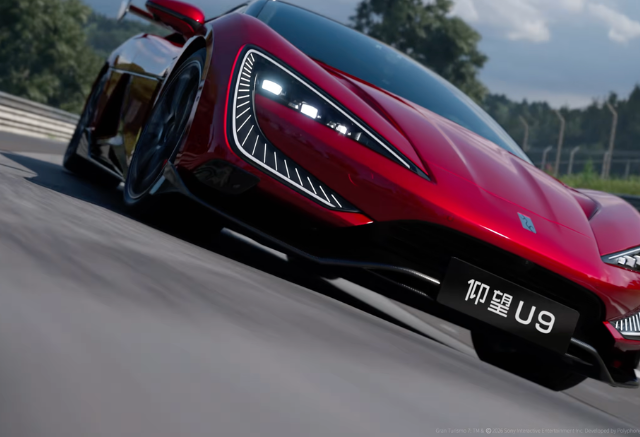
Back in the day, BYD’s cars were shamed as being the low-budget version that didn’t impress the auto industry. Nowadays, BYD has emerged as one of the major companies specializing in electric vehicles and is a serious rival for Tesla. Its growth is more than just a car narrative. It’s a tale of batteries, cheap production, brilliant builds, research and development and knowing your customer.
The BYD story started in 1995 when Wang Chuanfu, the chairman of BYD, began in the battery sector. Rising huge capital was required to join this industry and at that time, the global battery market was mostly controlled by the leading Japanese firms. Di put efforts in seeking alternative opportunities rather than compete with these giants on their own level.
He realised that there was one big problem with China they have cheaper labour. Therefore, BYD did not need to invest in expensive machines and instead adopted more basic manufacturing processes, leaning heavily on workers.
One of Wang’s most brilliant plans involved during the production of the batteries. Excessive cleanliness was required in nickel-cadmium battery manufacturing plants. Wang circumvented the need for costly clean-rooms built around entire factories by developing an enclosed piece of space for the battery assembly, which did not need to be kept clean, resulting in small clean rooms.
This solution reduced costs significantly for BYD, and enabled scale-up of production. The firm eventually landed big customers like Nokia and Motorola, and developed a successful battery line.
But for Wang, batteries were not the only means to BYD’s success. This was a transition industry had entered into lithium-ion and he was aware of the need preparedness for the upcoming change.
It’s at this moment that BYD began to deal with automobiles.
The first cars were no treat to look at. Their designs were found lacking, their quality was pushed into doubt and the company could not match the already established global manufacturers. Meanwhile, under Elon Musk’s tutelage, Tesla was turning into one of the hottest car makers in the world.
BYD has seemed like a company on a catch-up mission for years.
Instead, Wang did not give up and kept on funding R&D. The company used its profits on battery business to upgrade its cars, batteries and manufacturing know how.
Then there was BYD’s biggest breakthrough the Blade Battery.
BYD has pushed hard for a technology called “lithium iron phosphate battery” or “LFP” in short. The Blade Battery design was created to ensure safety while maintaining cost control.
BYD showcased their battery technology with the brilliant nail penetration test. The aim was to demonstrate the reactivity of the battery when it was badly damaged, operating in conditions that may lead to the conventional batteries catching fire.
The overarching concept was straightforward: render EVs safer, without driving up the costs to nearly inaudible figures.
That was however, only part of BYD’s plan.
The firm also made efforts to achieve vertical integration. BYD had much of its own control of the vehicle production process: batteries, components and production process. This helped the company to have more control of its suppliers and ease cost management.
Next, BYD made another critical decision. It saw plug-ins as a major investment, rather than just plug-in electric vehicles.
That was a good strategy since customers were still concerned with charging infrastructure, driving range and other issues in many locations in China. Electric driving for short journeys with a petrol engine for longer journeys.
By no means was BYD trying to just mimic Tesla, in other words. It was tackling a completely different issue with a lot more customers.
Then it was the price angle that was another selling point.
Tesla created a strong brand with regards to E.V’s, technology and performance all around the world. BYD concentrated on providing a significantly larger choice of cars with varying ammounts.
That brought BYD customers who were either price-conscious or weren’t into the all-electronic car.
BYD’s designs were hatched, and the company continued to make improvements. Sheep followed where they like, and the “ear-renting” company began to get back to making mode-darned cars, modern and high quality and uniquely their own.
Change was quite amazing.
Cost control, continuous innovation, and an understanding of their market were BYD’s three pillars that helped the company change its trajectory from a small battery maker to a major automotive company.
The first teaching here is pretty clear: Make a good money business first and then look for fame from all parts of the world. First, he had learned how to make batteries and used it to get him promoted.
The second is that innovation doesn’t have to be the most costly or complicated. Sometimes it is simply the smartest thing to do to find the cheap and efficient approach to solving a problem.
Last, but not least, BYD’s ability to stay cool, calm and composed when bashed and bashed, strongly reinforces the importance of not surrendering because of the biting and caustic remarks of others. It took years for the company to finally be taken seriously after being derided for years by all, and endeared by all Elon fans.It was years of being laughed out of court while Tesla garnered attention. BYD didn’t get upset at the noise, they got better.
Nowadays, BYD is one of the most interesting vehicles in today’s automotive industry… The company didn’t outdo itself by opting for the same strategy as its competitors. It established its own trajectory of batteries, manufacturing, cost and customer desires.
Most of it is obvious: if others think little of you, you don’t need to try to prove that they are wrong. Count this time to create something that cannot be denied.