
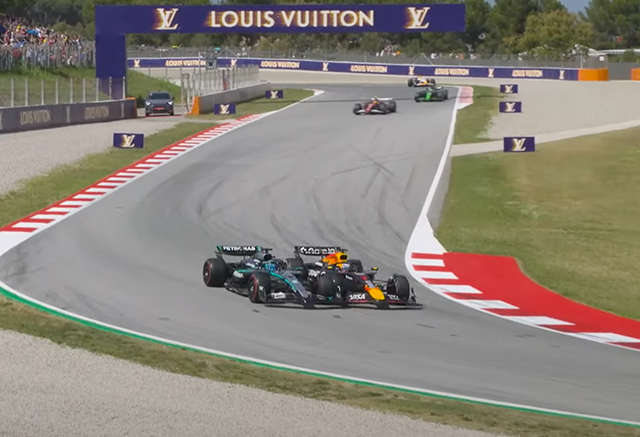
So, F1 Engines are once again in the spotlight and will be the fodder for a big debate, which will determine the future of Formula 1. Over 10 years after the sport ditched naturally aspirated V8 power units, there could be significant interest in bringing the defining cars of the sport back. Fia president Mohammed Ben Sulayem has been adamant that V8 engines should be included again by 2030 or 2031 as they would bring down costs, increase simplicity, enhance sound and make sport go back to its roots.
The conversations come at a crucial time for Formula 1. In response to the concerns growing around the current hybrid regulations, which were implemented this season, teams and manufacturers are employing efforts to address the issue. The implementation of the new power units has given the race more overtaking opportunities and raised the numbers in the ratings, but the amount of energy the new technology allows has encroached on the purity of the sport many drivers, engineers and insiders say.
The root of the problem is in the way today’s F1 cars are powered. Internal combustion and electrical power are currently on about a 50:50 plan. It’s technolologically advanced but it has brought drivers to heavy battery usage on race day and qualifying days. Drivers are not coming at corners head-high, but instead are lifting, coasting and gaining momentum in a style many consider to be lacking the jolt of aggressive attitude the Formula 1 racing world is known for.
Some corners are “charging stations” said Fernando Alonso just recently and this is exactly how the entire paddock feels! As the pressure to race for speed per force has increased, the way drivers go about doing qualifying laps and race strategy has been affected, and many in the sport now wonder if Formula 1 has been made too technical and less ‘natural’.
Saying it’s a no-brainer to stick with V8 engines is not quite that easy. In 2014, Formula 1 adopted turbo-hybrid power units, to follow the trend in the automotive sector of optimising efficiency and sustainability. Although the transition towards a completely electric future has taken well longer than originally believed, the fact that Formula 1 was still regarded as a place for future developments by manufacturers highlights its importance.
This moving toward compromise, as opposed to a going back to the past, is why discussions are now centered on it. The proffer presented by Ben Sulayem is reportedly based on naturally aspirated V8 engines and a miniscule hybrid part generating 10% of the power. Some in the know have expressed the wish for even less electrification that’s put into cars by the FIA president, as makers are hardly going to agree to going completely non-hybrid.
Gentile and straightforward like the V8 it serves, Mercedes team boss Toto Wolff has said that the business “loves V8s” but cautioned that “modern technological relevance cannot be ignored” in Formula 1. Honda has also talked about future engine concepts, but it has made it clear that innovation continues to be a part of the longer term development of the sport.
There is no better reason for the inclusion of V8s than weight savings. The current hybrid power units for vehicles weigh about 185kg due to batteries, electrical system and turbo components. Older V8 engines from the 2013 model year were substantially less weighty, and allowed the development of lighter, simpler vehicles.
Over the last few years, the vehicle size and weight of modern Formula 1 cars have been a matter of debate, as they have been getting bigger and bulkier, making them less agile and harder to overtake. A smaller and lighter engine package might help to deliver more manoeuvrability and reinvigorate the athletic flair that many passing-age fans and drivers delight in.
In the meanwhile, discussions regarding engine noises go into the talking point emotionalism of Formula One. Even older fans can recall that roar of old V8 and V10 motors that shattered grandstands to several Old Wagon Heads around the globe. For many, sound is intrinsically linked to the essence of Formula 1.
Nevertheless, it is not everyone’s opinion that more is more. For a new generation, Formula 1 discovered the fans on the “turbo-hybrid” with Drive to Survive on Netflix, a strategy for social media growth and expansion plans for Liberty Media. Older fans know the thundering engines of the distant past, but younger ones haven’t been around.
Commercial considerations too. Street races like those in Miami, Las Vegas, Singapore and Monaco have restrictions on their noise levels by securing permits from the local authorities. The result of powerful engines could lead to logistical issues at a lot of the F1’s most valuable meetings.
Last but not least, there is a delicate balance of tradition and innovation for Formula 1. The sport is keen on keeping the race sustainable in terms of fuel that does not have carbon footprint and at the same time sustaining its emotional excitement that made F1 the legend form of the sport. Teams have the short-term solutions for this season’s engine issues on the agenda as soon as it gets onto the agenda designed fuel flow, deployment of batteries and energy recovery systems up the table for next season.
Supply the larger debate on the future of F1 engines, however, could shape the next generation of F1. The outcome will be the same: more speed, less weight, more noise and more action – and maintain relevance in the rapidly evolving automotive landscape – whether it is under V8 power or a hybrid compromise.
Instagram: https://www.instagram.com/zeroto30s/
Facebook: https://www.facebook.com/zeroto30s/
Twitter: https://twitter.com/zeroto30s/
YouTube: https://www.youtube.com/@Zeroto30s