
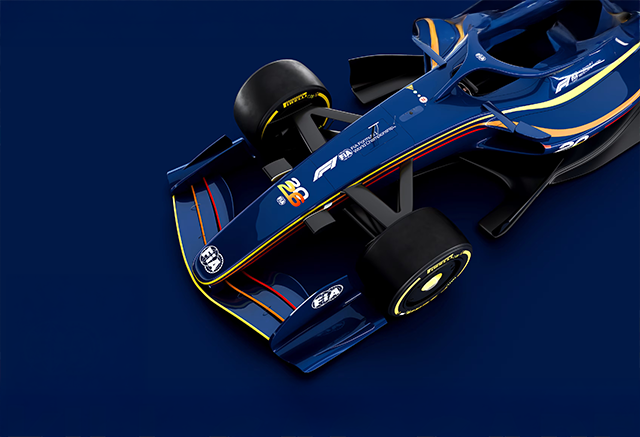
The new 2026 overtaking rules are a breakthrough in a significant revamp of Formula 1 that was felt in nearly 10 years. The FIA began to eliminate the use of DRS as the primary aid in overtaking starting in 2026, and presented a combination of active aerodynamics and electric power acceleration. The intention of the move is to ensure that passing is more skilled and authentic and give the drivers new tools but with new difficulties.
DRS (Drag Reduction System) is a drag reduction system that has been in place since 2011 and enables a trailing car when it opens up a flap in the rear wing of the vehicle in specific areas to achieve decreased drag within one second. In 2026, that changes. Overtaking aid (DRS) is being abolished. The system itself will not disappear, at least the movable wing concept will still be there, but its purpose is different, it is already connected to energy and aero strategy over the lap, not fixed, overtaking, zones.
That’s no small shift. Pilots will no longer be able to count on the DRs zone blitzs. They will be forced to think and time overtakes more attentively.
Mode active aero wing activated X-Mode / Z-Mode.
The cars will be equipped with active aero in the front and rear wing in order to substitute the shortcut used by DRS. The wings may be done by two methods;
X-Mode: This mode enables the vehicle to enjoy low drag which is perfect on a long straight and during overtaking.
Z-Mode: This is the high down-force mode that you use when going into the corners to have grip and stability..
The drivers will also change modes actively given the location on the track, tyre conditions, and the distance between them and a rival. Effectually, the wing manipulation has become a part of the racecraft. Brightener than DRS since (and instead of the fixed plane of a fixed region) we now possess the whole lap a chessboard of aero states.
F1 must also have a second plug to become a spark off with DRS gone. That is where Manual Override system comes in. When a car in pursuit is within one second of the leading vehicle, it receives a brief high intensity electrical charge aimed at assisting it to make an attempt.
This boost is alternatively known as MGU-K Override this provides up to 350 kW on the battlefield. Contrary to DRS, the drivers do not simply slap a switch, but they will choose when to give their vehicle an extra push, whereby time, battery control, and driver knowledge holds the greatest price. It is crazy to believe: wins the race can be decided by friendship over which one can best play the game of energy not necessarily by which one can get into slipstream.
Going around things cannot be in a vacuum. The halo of regulation transformation that is to be in place by 2026 influences power units, weight, aerodynamics and car shape – all of which spill over into passed dynamics.
Power Units & Hybrid Shift
The MGU-H is gone. That’s a big deal. The technology, which collected turbo heat, is abandoned to increase MGU-K power. Its electric side could use a serious upgrade, going up to the order of 350 kW.
The internal combustion side is adjusted backward; this time the division between ICE and electric is more of a balance (about 50/50). That makes energy king all this will be a matter of how much energy you carry on-board, when you use it, and how well you can replenish it in the braking areas will determine race craft.
Cars will weigh 30 kg less. Ample width and wheelbase are also tightened down – smaller front wing, skinnier body, smaller floor space. Downforce should be approximately that of 30 per cent and drag approximately that of 55 per cent. Less downforce also implies that slipstreams will be heavier, and it will be a bit easier to follow an automobile behind it. A reduced drag rate means that straightline speed becomes more essential. The combination form new overtaking sweet spots.
Strategy and mastery of the driver are now more important with overtaking not merely flutter-kick and wing-flock.
Time of the boost: At which time do you deploy that Manual Override? Too early the energy runs dry. Too late you make the miss. Energy conservation: The new regs are doubling its capability to charge when braking (to a maximum of 8.5 MJ per lap).
Racecraft on the edge:Slipstream passing, abreast corner entrances, corner defense this is all enhanced because there is not as much mechanical crutch.
Tyre control: Overdrive the tyres and they burst, and you lose control of the tyre at the crucial point when you are attempting to pass.
Track position /DRS zones: That will be less important. Rather, each section of the lap may be a chance so long as you play aero and energy correct.
Simply put, we are presenting again to racing in a race, we are making smarter decisions, we are getting to know the moods of the car and are asking it to make a mistake.
Difficulties, Uncertainties and Negativity.
Risk of energy depletion: On the one hand, there must be a battery burst, on the other hand, what is it? Do motorists become imprisoned in their low performance? There is the risk that some races can be so cautious.
Complexity onload: Can aero, mode, boost, energy: Can teams and drivers manage the game at that level of race intensity?
Balance problems: What happens when those suppliers of power units become better than that? Is that alter performance gaps?
Spectacle tradeoffs: It is feared that leaving DRS will deprive the audience of a certain assurance of a moment of overtaking will this remove the edge-of-seat drama?
Rule modifications: The regulations can be changed. There are those at the paddock who have already spoken about varying boost levels or activation regulations.
Passing in the 2026 era of F1 is undergoing a facade. The age of using a wing flap is almost over. And now it has had to do with aero modes, battery bursts, energy regeneration, and tactical brilliance. It is a lottery to the drivers, engineers, and race fans
Will there be more on track drama? Will races feel more organic? Time will tell. However, the only fact is that the pass in 2026 will not be only about the speed, but also about being wiser, bolder, and brighter.
Follow us on Zeroto30s social channels:
Instagram: https://www.instagram.com/zeroto30s/
Facebook: https://www.facebook.com/zeroto30s
Twitter: https://twitter.com/zeroto30s
Youtube: https://www.youtube.com/@Zeroto30s